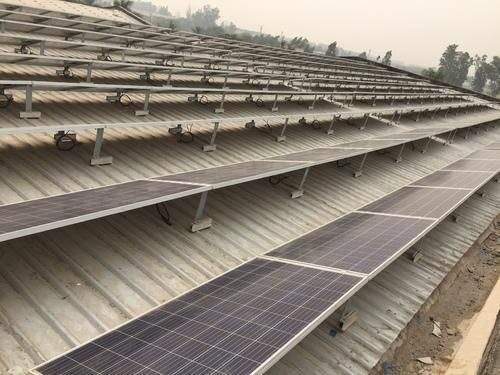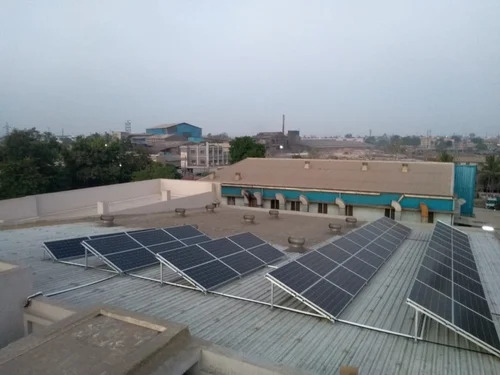
SOLAR RCC ROOFTOP STRUCTURE

SOLAR RCC ROOFTOP STRUCTURE

Price 10 INR/ Kilowatt

MOQ : 3 Kilowatts

SOLAR RCC ROOFTOP STRUCTURE Specification

  • Features
  • Corrosion Resistant, High Strength, Easy Installation, Wind Load Resistant
  • Maintenance Type
  • Low Maintenance
  • Efficiency
  • Structural Efficiency >90%
  • Product Type
  • Solar RCC Rooftop Structure
  • Material
  • Galvanized Iron (GI) / Mild Steel with Powder Coating
  • Number of Cells
  • Depends on solar panel used
  • Operating Temperature
  • -40C to +85C Celsius (oC)
  • Max Voltage
  • 1500 V DC Volt (V)
  • Max System Voltage
  • 1500 V DC Volt (V)
  • Size
  • Customizable (as per rooftop and module)
  • Color
  • Silver / Grey
  • Type Of Technology
  • Fixed Tilt/Seasonal Adjustable Support
  • Installation Type
  • RCC Rooftop Mounted
 

SOLAR RCC ROOFTOP STRUCTURE Trade Information

  • Minimum Order Quantity
  • 3 Kilowatts
  • Delivery Time
  • 7 Days
 

About SOLAR RCC ROOFTOP STRUCTURE

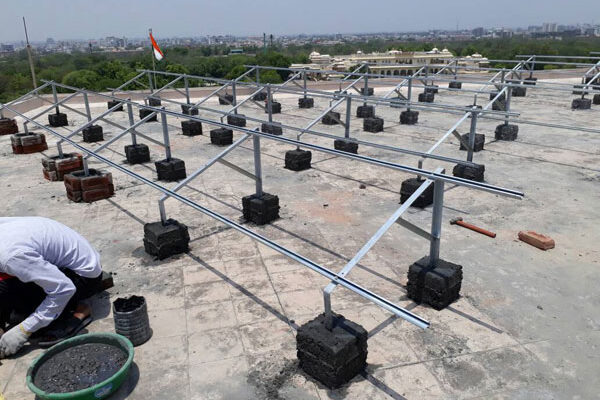
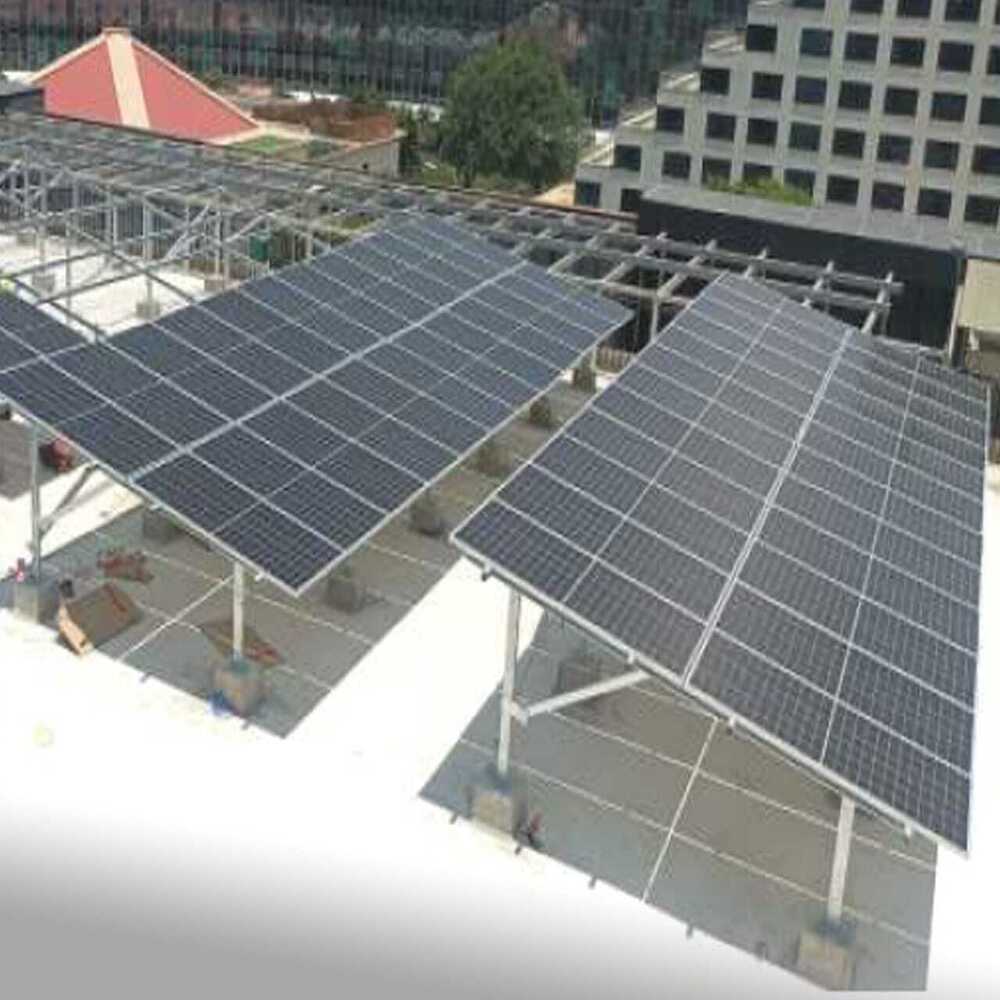
A Solar RCC Rooftop Structure refers to the structural system used to mount solar panels on the Reinforced Cement Concrete (RCC) rooftops commonly found in residential, commercial, and industrial buildings. This system supports solar photovoltaic (PV) panels and ensures optimal orientation, safety, and longevity.

Heres a breakdown of the key elements involved:


Components of a Solar RCC Rooftop Structure

  1. Mounting Structure

    • Material: Usually made of hot-dip galvanized iron (GI), mild steel, or aluminum to prevent corrosion.

    • Types:

      • Fixed tilt: Panels are mounted at a fixed angle.

      • Adjustable tilt: Allows seasonal tilt adjustments.

      • Ballasted: No roof penetration; uses weights.

      • Penetrative: Anchored to the roof via fasteners or chemical anchors.

  2. Solar Panels

    • Typically monocrystalline or polycrystalline.

    • Mounted on frames to optimize sun exposure.

  3. Anchoring Mechanism

    • Chemical anchors or grouting into RCC for stability.

    • Ballast blocks (concrete or pre-cast) to avoid drilling in some cases.

  4. Wind Load Resistance

    • Must be designed as per IS 875 (Part 3) to withstand local wind loads.

    • Critical in high-rise or coastal areas.

  5. Tilt Angle

    • Optimal tilt depends on geographic latitude; for India, its typically between 1030.

    • Ensures maximum solar exposure throughout the year.

  6. Walkway & Maintenance Path

    • Space provided for cleaning and inspection.

  7. Earthing & Lightning Protection

    • To protect both equipment and the structure from electrical surges and lightning.


RCC Roof Considerations

  • Structural Load: Roof must be assessed to carry additional loads (1520 kg/m).

  • Waterproofing: Ensure proper waterproofing before anchoring to prevent leakage.

  • Shade-Free Area: Rooftop must have minimal shadowing from nearby structures, water tanks, or trees.


Advantages of Solar on RCC Roofs

  • Utilizes unused space.

  • Reduces electricity bills.


Corrosion-Resistant & Durable Design

Our solar RCC rooftop structures use either hot dip galvanization or powder coating, offering superior protection against harsh weather and corrosion. Stainless steel fasteners and ROHS/ISO certified fabrication ensure lasting performance and environmental compliance, making the system ideal for long-term rooftop installations.


Flexible Installation & Panel Compatibility

With anchor bolt or foundation-less ballast mounting options, installation adapts to varying site conditions. The structure accommodates both landscape and portrait orientation and fits all standard crystalline and thin film solar modules, making it customizable for different project needs and maximized power generation.


Safety, Efficiency & Easy Maintenance

Designed for high structural efficiency (>90%) and safety, the system includes wind load resistance up to 180 km/hr, earthing/grounding lugs, and fire resistance. Assembly and maintenance are straightforward, aided by disassembled eco-friendly packaging and a comprehensive installation manual.

FAQs of SOLAR RCC ROOFTOP STRUCTURE:


Q: How is the SOLAR RCC ROOFTOP STRUCTURE installed on different types of rooftops?

A: This structure offers anchor bolt-based mounting for permanent installations and a foundation-less ballast type for rooftops where drilling is not allowed. The choice depends on site conditions and customer requirements, allowing flexibility for concrete, RCC, or flat roofs.

Q: What corrosion resistance treatments are applied to the structure?

A: The structure is treated with either hot dip galvanization or powder coating, both of which provide excellent corrosion protection in diverse climate conditions, ensuring a lifespan of over 25 years with minimal maintenance.

Q: When should I adjust the tilt angle of the solar panels?

A: Adjusting the tilt angle (between 5 and 30) can be done during installation or periodically to optimize panel performance based on seasonal sun paths and location-specific requirements, maximizing energy yield through the year.

Q: Where can this solar mounting structure be installed?

A: This product is specifically designed for RCC rooftops in industrial, commercial, and residential settings, but can be customized for various site dimensions and solar panel configurations across India.

Q: What is the process of assembling the structure upon delivery?

A: The structure is delivered in disassembled, eco-friendly packaging with a detailed installation manual. Components are systematically organizedrequiring only standard tools for assembly, following a straightforward, step-by-step process to minimize on-site labor.

Q: What are the benefits of using this structure for solar rooftop applications?

A: Benefits include high wind load resistance (up to 180 km/hr), adjustable tilt for optimal energy capture, compatibility with various solar modules, long-term corrosion resistance, fire safety, ROHS/ISO-certified fabrication, and low maintenance over its 25+ year lifespan.

Q: How is electrical grounding ensured with this mounting system?

A: The structure comes with integrated earthing or grounding lugs, allowing easy and secure connection of the solar array to the site earthing system, enhancing operational safety and electrical compliance.

Tell us about your requirement
product

Price:

Quantity
Select Unit

  • 50
  • 100
  • 200
  • 250
  • 500
  • 1000+
Additional detail
Mobile number

Email

More Products in Solar Mounting Structure Category

SOLAR MOUNTING STRUCTURE

SOLAR MOUNTING STRUCTURE

Price 3500 INR / Kilowatt

Minimum Order Quantity : 5KW Kilowatts

Size : Customizable as per project requirements

Material : Hot Dip Galvanized Steel / Aluminium Alloy

Product Type : Other, Solar Mounting Structure

Features : Corrosion resistant, High mechanical strength, Easy Installation, Durable Finish, Customizable Designs

ALUMINIUM SOLAR MODULE STRUCTURE

ALUMINIUM SOLAR MODULE STRUCTURE

Price 4500 INR / Kilowatt

Minimum Order Quantity : 5 Kilowatts

Size : Standard

Material : ALUMINUM

Product Type : Other

Features : Good Quality

SOLAR PANEL MIDDLE CLAMP ALL SIZE

SOLAR PANEL MIDDLE CLAMP ALL SIZE

Minimum Order Quantity : 100 Pieces

Size : All size (compatible with solar panel thickness 30mm to 50mm, or as specified)

Material : Aluminum Alloy (usually 6063T5/T6 or equivalent)

Product Type : Other, Solar Panel Middle Clamp

Features : Corrosionresistant, easy installation, high strength, compatible with most mounting systems

SOLAR MOUNTING STRUCTURE ALUMINUM

SOLAR MOUNTING STRUCTURE ALUMINUM

Price 400 INR / Kilowatt

Minimum Order Quantity : 3 Kilovolts

Size : Standard

Material : Aluminum

Product Type : Other

Features : Good Quality


Back to top